Walk into any shop and ask for “a fade.” You will get one. It may not be the one you pictured.
This is how to ask for a fade and get the one you pictured.
A fade is not a single haircut. It is a range. The word only tells your barber that the hair gets shorter as it moves down. It says nothing about where that change starts, how short it ends, or what happens on top.
Three words fix most of that: low, mid, or high. Learn those and you can ask for the cut you actually want.
What’s in this guide
- What a fade actually is
- Low, mid, and high
- Then say how short
- Do not forget the top
- The neckline and the edges
- How to ask for a fade, in one breath
- Hair type changes the answer
- How a fade goes at K Lawrence
- Come sit down
What a fade actually is
A fade is a gradual blend. The hair is long at the top and gets shorter toward the neck and ears. Done right, you cannot see where one length stops and the next begins.
That blend is the whole job. A bad fade shows lines. A good one looks like the hair simply grew that way.
The blend has to start somewhere. Where it starts is the single biggest choice you make.
Low, mid, and high
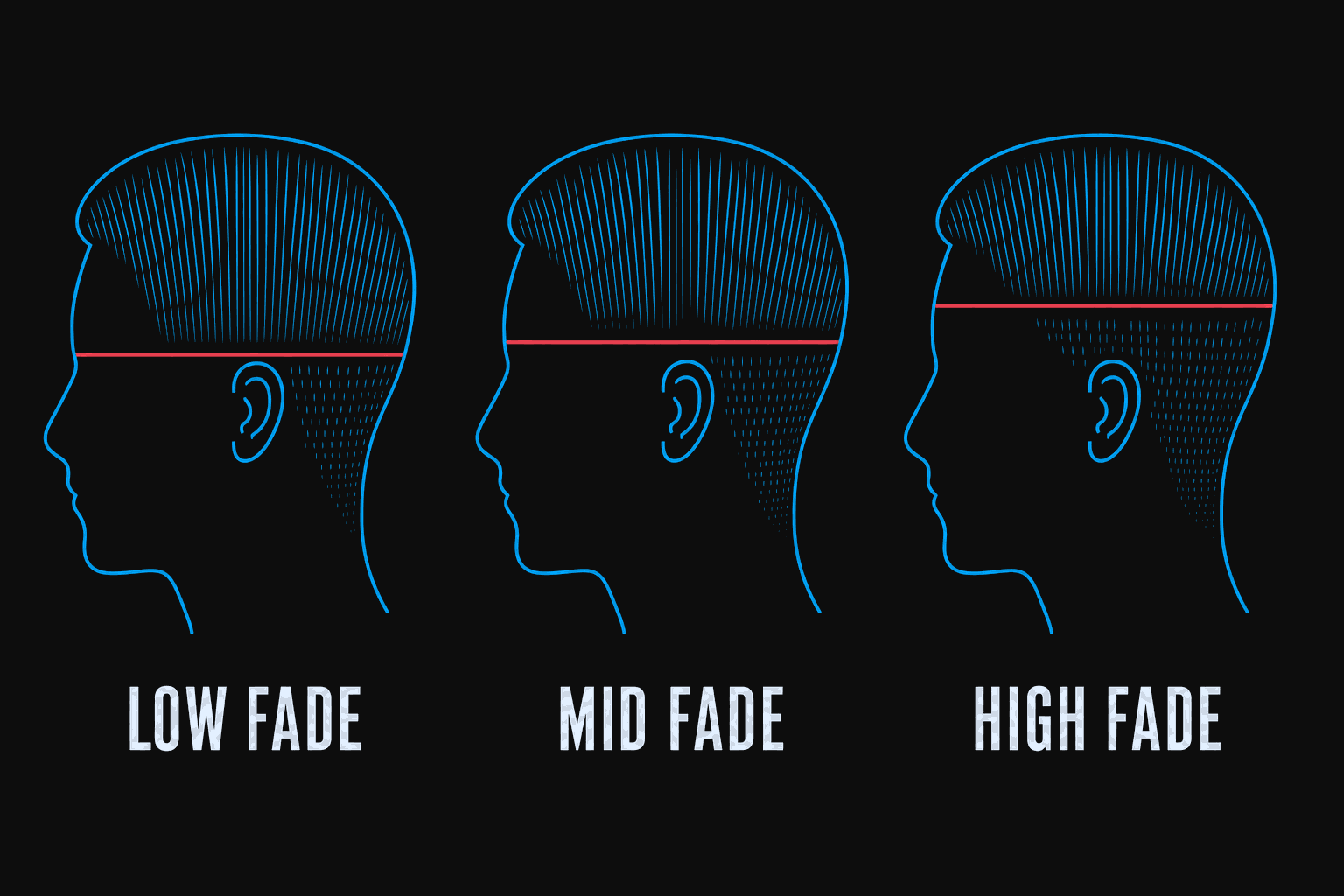
Picture the side of your head. Find the widest point, roughly where your temple curves back toward your ear. That curve is your reference.
A low fade starts just above the ear and the neckline. The short work stays down near the bottom. Most of your hair keeps its length. This is the quiet option. It reads clean in an office and grows out slowly.
A mid fade starts partway up, between the ear and the temple. It is the middle setting, and it is the one most guys mean when they say “fade.” It shows more shape than a low fade without going bare.
A high fade starts at or above the temple. The sides go short fast and the contrast is sharp. It puts real attention on whatever is happening on top. It also grows out fastest, so plan on coming back sooner.
None of these is better. They are three different amounts of contrast.
Then say how short
Low, mid, and high tell your barber where the blend starts. They do not say how short it finishes.
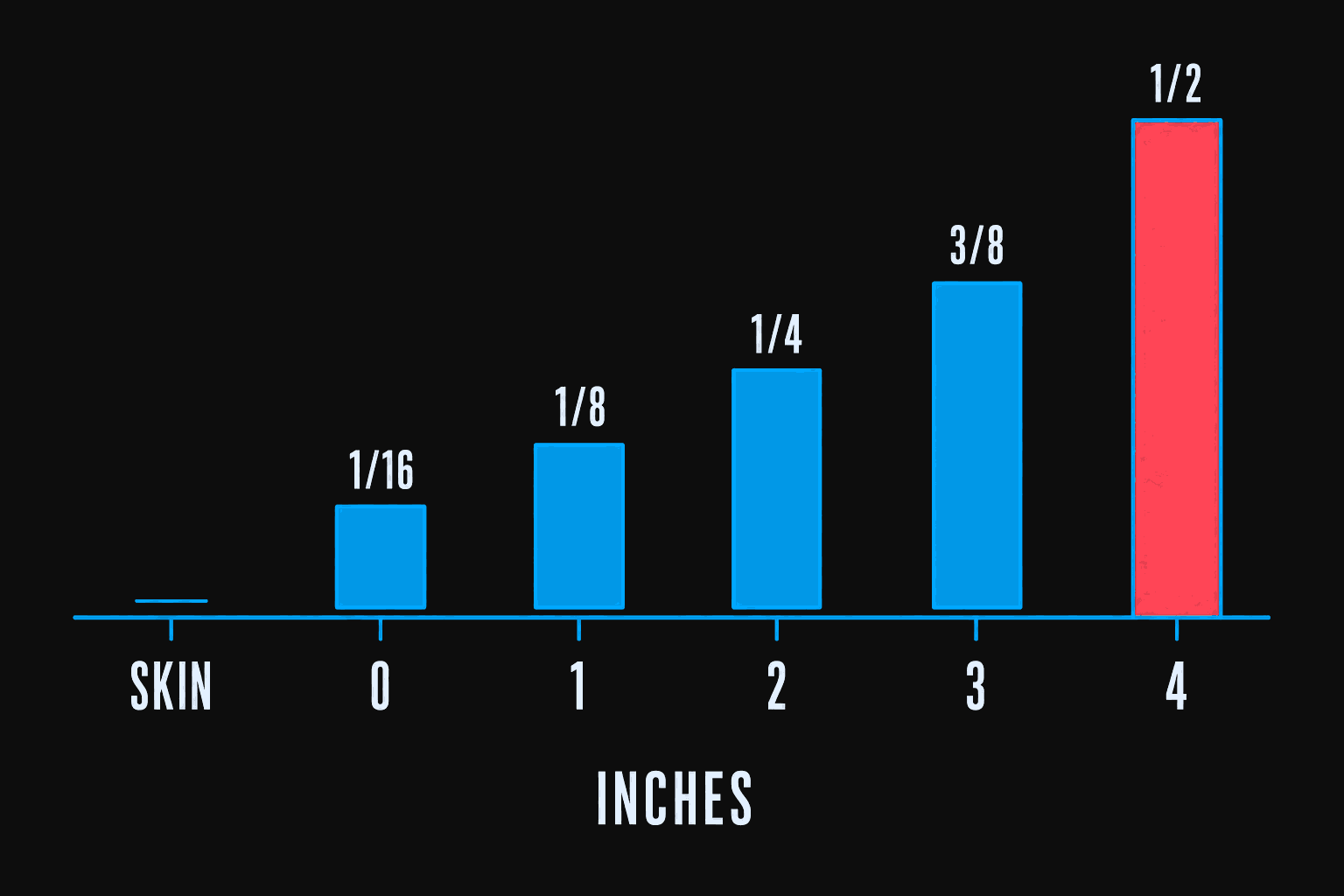
That is set by guard number. Guards are the plastic combs on the clippers, and they climb by eighths of an inch.
- Skin or bald means no guard. Razor or blade to the skin.
- Zero is about one sixteenth of an inch. Very close, still hair.
- One is an eighth of an inch.
- Two is a quarter inch.
- Three is three eighths, and so on.
A “skin fade” and a “low fade” are answers to two different questions. You can have a low skin fade or a high number two fade. Say both parts and you have described the bottom half of your head clearly.
Do not forget the top
Here is where most requests fall apart. Guys spend all their words on the sides and say nothing about the top. Then they are surprised by the length up there.
Tell your barber two things.
First, how much comes off. “Take about an inch” is useful. “Just a trim” is not, because a trim means different things to different people.
Second, how you wear it. Do you push it back, part it, leave it messy, or let it fall forward? A barber cuts differently for hair that gets combed than for hair that gets nothing but a towel.
The neckline and the edges
Two small choices change how the cut looks in week three.
Your neckline can be squared off, rounded, or left natural. Squared looks sharpest on day one. Natural looks better as it grows, because there is no hard line creeping down your neck.
Your hairline can be lined up with a razor for crisp edges, or left soft. A hard line up looks excellent for about ten days. After that it starts to blur, and some guys dislike the in-between stage.
If you come in every two weeks, take the line up. If you stretch to six, go softer.
How to ask for a fade, in one breath
Put it together and a good request sounds like this:
“Mid fade, number one at the bottom, blended up. Take about an inch off the top. I wear it pushed back. Natural neckline, and go ahead and line up the front.”
That is fifteen seconds of talking. It removes almost all the guesswork.
If you cannot describe it, bring a photo. A photo of your own hair after a cut you liked beats a photo of a stranger. Your hair type is yours, and a picture of someone else’s head is a target, not a promise.
Hair type changes the answer
Straight, fine hair shows every line. Blends have to be worked longer and softer, and a skin fade can look stark.
Thick, coarse hair holds shape well and takes a high fade cleanly.
Curly and coily hair blends beautifully but shrinks after it dries. What looks right while wet can read much shorter an hour later. A good barber accounts for that shrinkage before the first pass.
Say the word if your hair does something unusual. Cowlicks, a low crown, thinning at the temples, a scar you would rather not expose. All of it changes the cut. None of it is a problem if it comes up at the start.
How a fade goes at K Lawrence
We talk before anything starts. Head shape, hair type, and how you actually wear it day to day. Say so if you are between styles or growing something out. It changes where the blend should sit.
A haircut is $40 and takes about 45 minutes. Every one finishes with a straight razor line up. Then your choice of a hot towel or a wash. That is in the price, not added at the chair.
If you want the sides tight and nothing else, the buzz cut is $30. Been a couple of weeks, and the shape still holds? Ask for a line up. That is $20 and twenty minutes.
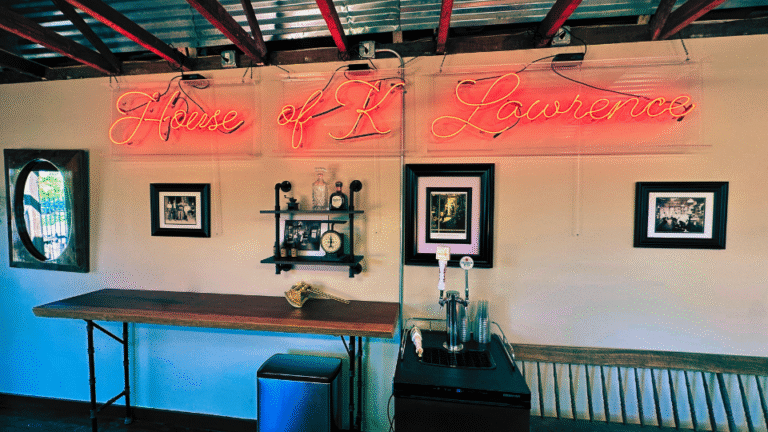
Two chairs, no rush, and a cold beer if you want one.
Come sit down
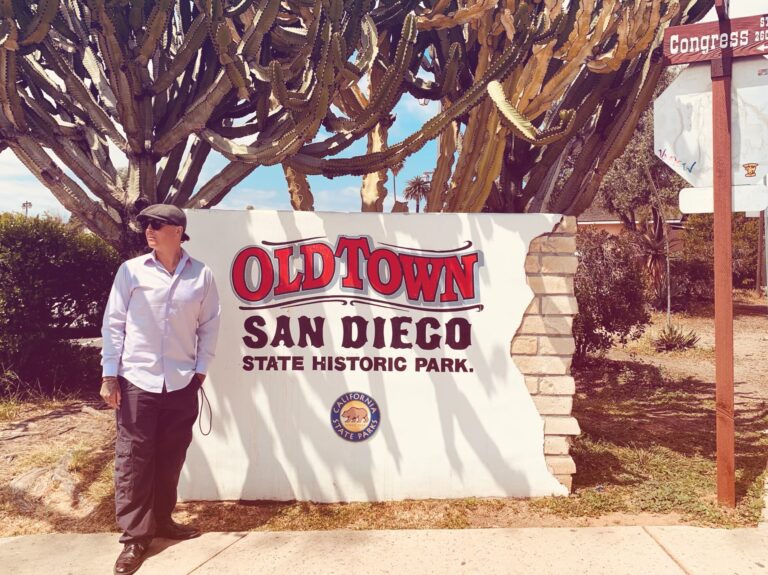
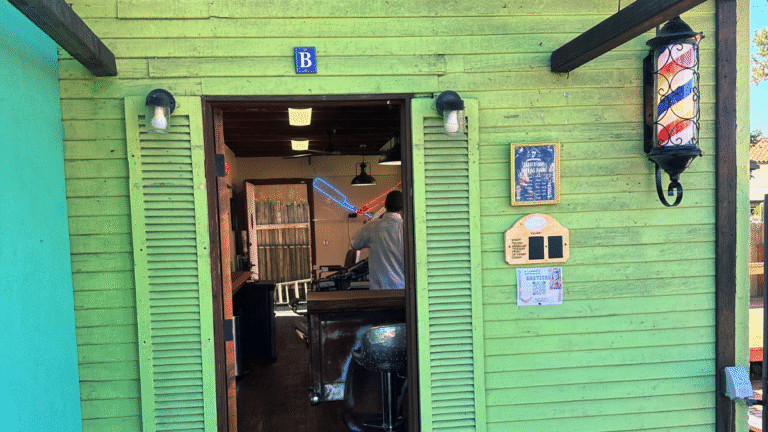
We are at 2611 Congress St, Suite B, in Old Town. It is a short walk from Old Town San Diego State Historic Park. Street parking runs along Congress St.
Walk in whenever a chair is open. Old Town fills up on weekends. Booking ahead is the surest way to get the time you want. Call (619) 289-7176 or book online.
Still deciding? Look through the gallery and point at the one you want.
Common questions
What is the difference between a low, mid and high fade?
The difference is where the blend starts. A low fade starts just above the ear and neckline, so most of your length stays. A mid fade starts between the ear and the temple. A high fade starts at or above the temple, which gives the sharpest contrast and grows out fastest.
What guard number should I ask for?
Guards climb by eighths of an inch. Zero is about a sixteenth, one is an eighth, two is a quarter inch, three is three eighths. Skin or bald means no guard at all. Say the guard number along with low, mid or high, because they answer two different questions.
Is a skin fade the same as a low fade?
No. A skin fade describes how short the bottom finishes, which is down to the skin. A low fade describes where the blend starts. You can have a low skin fade or a high number two fade. Give your barber both details.
How often do I need to come back for a fade?
A high or skin fade needs attention about every two weeks, because the contrast closes quickly. A mid or low fade holds three to four weeks. A line up at $20 can stretch a good cut by another week or two.
What should I say about the top of my haircut?
Tell your barber how much comes off and how you wear it. An inch is a useful number. A trim is not, since it means something different to everyone. Also say whether you push it back, part it, or leave it alone.